Project founded by DAFM in collaboration with University College Cork (UCC) and Trinity College Dublin (TCD).
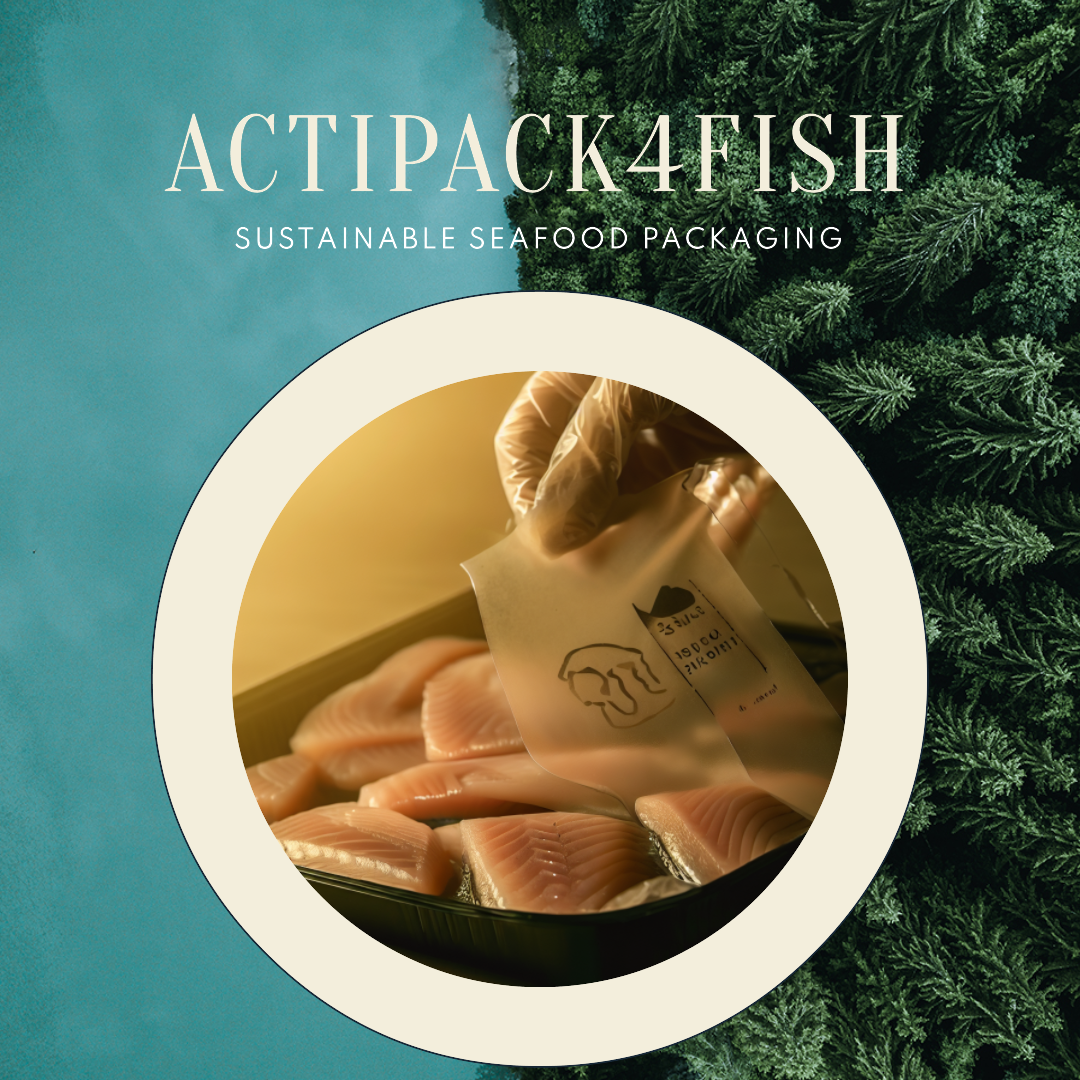
Plastic pollution and food waste are two major issues worldwide and sustainable packaging development and application is currently the dominant trend across the food industry. ACTIPACK4FISH will develop and demonstrate use of new generation, sustainably-active antimicrobial/antioxidant packaging materials (AAPM) for seafood shelf-life extension, enhanced safety, and reduced food and packaging waste, thus addressing environmental concerns associated with such packaging materials and formats. Natural substances will be screened, optimized and characterized to finally integrate them into novel packaging materials, including: sustainable, recyclable and biodegradable polymers to produce advanced multi-functional packaging applications. Whilst potentially suitable for a wide range of food packaging applications, this project will apply and validate these technologies at laboratory and industrial scale for modified atmosphere packaging formats of selected fresh pelagic and demersal fish. Adoption of ACTIPACK4FISH sustainable materials will provide seafood processing companies with significant potential to extend product shelf-lives up to 2 days, reducing food waste for non-recyclable synthetic plastics use and its subsequent waste-streams, supply-chain efficiency and export potential for circumventing delays in the chilled distribution chain or for reaching further-distant export markets. ACTIPACK4FISH will help the Irish seafood industry meet the economic, regulatory and social pressures to be more sustainable. This project relies on the team’s knowledge and expertise in seafood and packaging technology, materials science ans food safety.
Task 1. Communication, Dissemination and Knowledge Transfer
Objective:
– To promote the project, partners, funding, and activities, employing a range of communication and dissemination tools.
and carry out scientific dissemination of results, via publications, conferences, networks or external collaborations.
Task 2. Selection of natural antimicrobials for potential use on sustainable packaging materials.
Objective:
-Assess the antimicrobial activity of food-grade antimicrobials for active packaging applications.
Task 3. Surface modification techniques for deposition of clean-label antimicrobial substances onto packaging materials.
Objective:
-Evaluate suitability of selected natural antimicrobials for deposition onto packaging materials to develop antimicrobial active packaging for food applications and demonstrate delivery of active food packaging based on food grade antimicrobials.
Task 4. Development of edible/sustainable antimicrobial absorption pads for packaging applications and development of multilayer/single-polymer biobased packaging materials.
Objective:
-Manufacture compostable antimicrobial absorbing pads and multilayer/single-polymer biobased packaging materials.
Task 5. Detailed characterization, performance and safety assessment of new antimicrobial-active packaging materials.
Objective:
– Assess the effects of surface modification techniques of natural antimicrobial on the physical, mechanical and barrier properties of the polymers and screen the potential toxicity issues of the developed AAPM.
Task 6. Shelf-life testing of fish packaged using the developed sustainable antimicrobial active packaging materials.
Objective:
-Determine the shelf-life of fish packaged using the developed sustainable AAPM and assess the combined effect of super chilling and VSP fish products using the developed AAPM to increase significantly the shelf-life of fresh fish products.
Task 7. Life Cycle Assessment (LCA)
Objective:
-Develop LCA methodology for packaging products and compare LCA results on environmental performance of the developed AAPM to conventional commercial packaging materials used for fish packaging.
 Actipack4fish